

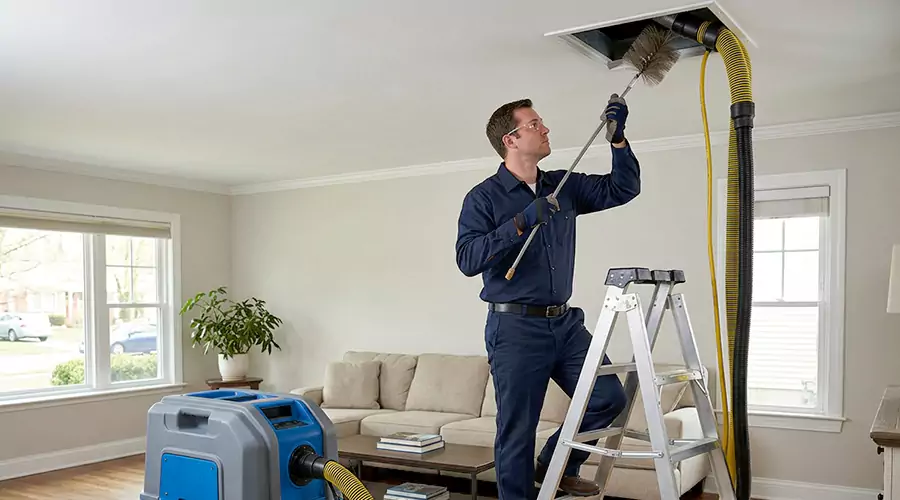
Professional air duct cleaning can be worth the cost when ducts contain substantial dust and debris, evidence of pests, or confirmed contamination that requires removal. However, routine cleaning of relatively clean residential ducts has not been shown to consistently improve health, indoor air quality, or energy efficiency. The value depends on the actual condition of the ductwork and whether cleaning will correct a documented problem.
Air duct cleaning services remove accumulated material from the heating and cooling distribution system. Professional technicians typically use specialized vacuums and agitation tools to loosen debris and collect it without spreading it throughout the home. Homeowners often consider the service because of dust around registers, concerns about allergies, or a desire to improve HVAC performance. Although these concerns are understandable, not every problem can be corrected by cleaning duct interiors.
The EPA recommends evaluating the need for cleaning rather than scheduling it automatically. Understanding when professional service is appropriate helps homeowners spend money on work that addresses the actual problem.
When Is Professional Air Duct Cleaning Worth It?
Professional cleaning is most useful when inspection confirms significant contamination inside the duct network. Removing substantial debris can address a documented cleanliness problem, particularly when loose material is entering occupied rooms.
The following table explains when cleaning may be appropriate.
| Duct Condition | Is Professional Cleaning Worth Considering? |
|---|---|
| Heavy dust and debris accumulation | Yes, especially when material is being discharged |
| Rodent or insect contamination | Yes, after pest problems are addressed |
| Significant construction debris | Yes, if debris entered the system |
| Confirmed mold on hard metal surfaces | Professional assessment and appropriate remediation |
| Wet or moldy fiberglass duct insulation | Replacement rather than ordinary cleaning |
| Light surface dust inside otherwise sound ducts | Usually not necessary |
| Dust on a removable return grille | Clean the grille first |
| Duct leakage or disconnected branches | Repair and sealing are more appropriate |
The EPA identifies substantial visible mold, pest infestation, and excessive debris as circumstances in which cleaning should be considered. It also emphasizes correcting underlying problems so contamination does not return.
What Are the Benefits of Professional Air Duct Cleaning?
Removal of Accumulated Debris
A qualified company can remove deposits from duct interiors that homeowners cannot reach using ordinary household equipment. This can be particularly useful after construction dust or pest debris enters the system.
Removing material from the ducts does not guarantee that the home's overall airborne dust level will decrease. However, it addresses contamination present within the passages themselves.
Cleaning Accessible HVAC Components
A properly defined service may include more than the duct interiors. NADCA recommends evaluating the connected HVAC system, including supply and return ducts, plenums, registers, blower components, and other relevant equipment.
Cleaning dirty coils and blowers can support normal equipment performance in situations where contamination is interfering with operation. The EPA notes that evidence for efficiency improvements from cleaning mechanical components is stronger than evidence for cleaning duct passages alone.
The contractor should explain exactly which components are included and which require separate HVAC service.
Identifying Hidden Duct Problems
Professional inspection may reveal disconnected branches, damaged insulation, moisture entry, or significant contamination. These findings can help homeowners decide whether cleaning, repair, or replacement is appropriate.
However, cleaning should not be sold as a substitute for duct repair. An open joint will continue leaking until it is properly secured and sealed. A collapsed flexible duct may need replacement rather than additional cleaning.
Does Air Duct Cleaning Improve Indoor Air Quality?
The answer depends on the contamination present and the quality of the cleaning process. Removing a documented source of debris can be appropriate, but research does not establish consistent indoor air quality improvements from routine duct cleaning in ordinary homes.
The EPA explains that much of the dust inside ducts adheres to their surfaces rather than continuously entering the occupied rooms. Household activities, outdoor particles, cooking, and other sources can contribute significantly to indoor air pollution. A scientific review published in indoor air also found insufficient evidence for reliable improvements in overall air quality or occupant health from duct cleaning.
Homeowners should therefore avoid companies promising completely dust-free or allergen-free indoor air after the service.
Is Air Duct Cleaning Worth It for Allergies?
Air duct cleaning may be appropriate when the system contains significant contamination, but it is not an established treatment for allergies or asthma. The EPA states that routine duct cleaning has not been shown to prevent health problems.
Allergens may come from pets, bedding, carpets, and outdoor sources unrelated to duct contamination. Cleaning these sources and maintaining appropriate HVAC filtration can be useful parts of household management. If occupants experience persistent symptoms, healthcare advice and a broader assessment of the indoor environment are more appropriate than assuming ducts are responsible.
Does Air Duct Cleaning Lower Energy Bills?
Cleaning heavily contaminated equipment components may help when buildup interferes with their operation. However, the EPA states that little evidence shows cleaning ducts alone will improve HVAC efficiency.
A clogged filter, leaking duct connection, or dirty cooling coil can affect performance in ways that ordinary duct interior cleaning may not correct. Identifying those problems separately is important. Companies advertising guaranteed utility bill reductions from duct cleaning should be approached cautiously. Any energy benefit depends on the existing condition of the system and the specific work performed.
How Much Does Professional Air Duct Cleaning Cost?
Angi's October 2026 U.S. cost data places professional air duct cleaning between approximately $271 and $509 for many homes, with an average near $389. HomeGuide's estimates for broader cleaning scopes range from about $450 to $1,000.
Prices vary because service packages may cover different components and require different amounts of labor.
| Pricing Factor | How It Affects Cost |
|---|---|
| Home size | Larger systems usually require more work |
| Number of vents | More openings and branches increase cleaning time |
| Number of HVAC systems | Separate systems may require separate setups |
| Duct material | Flexible or lined ducts need appropriate tools |
| Contamination level | Heavy deposits may need additional cleaning |
| Accessibility | Concealed connections can increase labor |
| Additional services | Repairs and remediation may be charged separately |
Compare estimates based on the components included rather than the advertised starting price alone.
What Happens During Professional Air Duct Cleaning?
A reputable company begins by inspecting the system and identifying accessible cleaning points. Technicians protect the work areas before connecting professional vacuum collection equipment.
NADCA describes proper cleaning as a source-removal process. Mechanical agitation loosens deposited material while negative-pressure equipment captures the debris. Different tools may be used depending on duct construction. The service should address the components identified in the agreed work scope. Afterward, the technicians should inspect the cleaned surfaces, restore access panels, and confirm that the system is ready to operate. A complete service is different from briefly inserting a vacuum hose through several room registers.
Can Professional Duct Cleaning Damage HVAC Ductwork?
Improper cleaning methods can damage flexible liners, fiberglass duct board, or internally insulated ducts. Aggressive tools that are suitable for bare metal may not be appropriate for delicate materials.
The EPA warns that poor cleaning practices can release more particles into living spaces or damage the HVAC system. Technicians should identify the duct materials before selecting their equipment. If insulation is deteriorating, wet, or moldy, replacement may be necessary rather than aggressive cleaning. The contractor should explain these limitations during inspection.
How Can You Avoid Air Duct Cleaning Scams?
Some companies advertise unusually low whole-house prices and then recommend expensive additional services after arriving. Others make unsupported claims about health benefits or insist that every system requires annual cleaning.
Before hiring a company:
- Request a written description of the complete cleaning scope.
- Ask which supply and return components are included.
- Verify relevant experience and insurance.
- Ask whether technicians follow NADCA's ACR cleaning standards.
- Request evidence supporting claims of contamination.
- Clarify whether chemical treatments are proposed.
- Obtain written approval requirements for additional charges.
The EPA does not certify or endorse individual air duct cleaning companies. Be cautious of businesses claiming to hold special EPA certification for duct cleaning.
When Is Duct Repair Better Than Cleaning?
Repair is more appropriate when an inspection identifies a damaged or disconnected duct. Cleaning cannot restore an airtight joint or correct a crushed flexible passage.
Similarly, a cooling system with a dirty filter or malfunctioning blower may need ordinary HVAC maintenance rather than duct cleaning. Persistent moisture problems require correction before contaminated material is cleaned or replaced. The most cost-effective decision starts with identifying the source of the complaint. Sometimes a relatively small repair provides more value than cleaning an otherwise sound duct network.
Conclusion
Professional air duct cleaning is worth considering when inspection confirms significant contamination that can be removed safely. It can address heavy debris and certain contamination problems, but routine cleaning is not proven to provide consistent health or energy savings. The cleaning method should match the duct materials and include an appropriate scope of work. Before paying for the service, request evidence of the problem and compare qualified contractors.